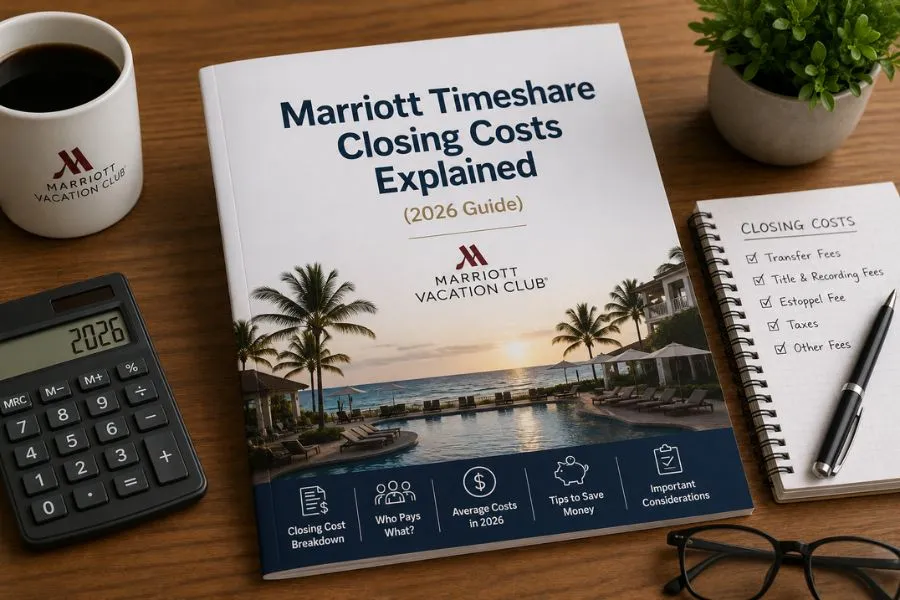
Selling a Timeshare Vacation Club ownership involves more than finding a buyer and completing the ownership transfer. Before the transaction is finalized, buyers and sellers should also understand the closing costs associated with the resale process.
Many owners focus on pricing, buyer interest, and transfer timelines but overlook the expenses that may arise when the transaction reaches the closing stage. Knowing what these costs are and who may be responsible for them can help avoid confusion later.
If you're still preparing to sell your ownership, it's also worth understanding the overall process of selling your Timeshare Vacation Club ownership before reviewing closing expenses.
In this guide, we'll explain what Timeshare closing costs are, who typically pays them, the factors that influence them, and how both buyers and sellers can prepare for a smoother closing experience.
Key Takeaways
- Closing costs are a normal part of many Timeshare resale transactions.
- The total cost varies depending on the ownership and transaction requirements.
- Buyers and sellers should understand their responsibilities before closing.
- Transfer-related expenses are often discussed before the sale is finalized.
- Preparing documentation early can help prevent unnecessary delays.
- Understanding the closing process helps owners set realistic expectations.
- Good communication between all parties can make closing more efficient.
- Reviewing the transaction carefully before closing reduces surprises.
What Are Timeshare Closing Costs?
Timeshare closing costs are the expenses associated with completing the ownership transfer after a buyer and seller reach an agreement. Depending on the transaction, these costs may include transfer-related administrative fees, documentation processing, and other closing requirements.
The exact costs vary based on the ownership, transfer requirements, and the agreement between the parties involved.
Why Closing Costs Matter
Closing costs are one of the final steps in the resale journey.
Although finding a buyer is a significant milestone, completing the sale requires additional administrative work before ownership officially changes hands.
If you've already found a buyer for your Timeshare, understanding closing costs is the next step in preparing for a successful transaction.
Being informed before closing allows both buyers and sellers to move through the final stages with greater confidence.
What May Be Included in Closing Costs?
The exact expenses vary from one transaction to another, but closing costs may include several administrative and transfer-related items.
Ownership Transfer Processing
Once the sale has been agreed upon, ownership records must be updated.
As explained in our guide to the Timeshare transfer process, this stage ensures that ownership is officially transferred from the seller to the buyer.
Administrative processing may form part of the overall closing expenses.
Documentation Processing
During closing, documents are reviewed and processed to complete the transaction accurately.
Having complete and organized ownership records before closing can help avoid unnecessary delays.
Administrative Requirements
Every resale transaction includes administrative procedures that help ensure ownership records are updated correctly.
The requirements may differ depending on the ownership and transaction details.
Additional Transaction Expenses
Depending on the agreement between the buyer and seller, other transaction-related expenses may also arise during closing.
These vary from transaction to transaction, making it important to review the terms before the sale is finalized.
Who Typically Pays Closing Costs?
There isn't a universal rule that applies to every Timeshare Vacation Club resale.
Responsibility for closing costs is often determined by the agreement reached between the buyer and seller.
Some transactions allocate certain expenses to the buyer, while others may assign different responsibilities to the seller or divide the costs between both parties.
Reviewing these details early helps reduce misunderstandings later in the process.
What Factors Can Affect Closing Costs?
Several factors may influence the overall closing expenses.
These include:
- Ownership type
- Transfer requirements
- Administrative processing
- Documentation requirements
- Terms agreed upon by the buyer and seller
Owners who already understand what their Timeshare is worth are often better prepared to evaluate the overall resale transaction, including closing considerations.
Can Closing Costs Be Negotiated?
In many resale transactions, the responsibility for closing costs is determined through an agreement between the buyer and the seller.
Rather than assuming who will pay each expense, it's a good idea to discuss these details before the transaction reaches the closing stage. Having a clear understanding of each party's responsibilities can help prevent misunderstandings later.
How to Prepare Before Closing
A little preparation can make the closing process more efficient and reduce the likelihood of delays.
Review Your Ownership Information
Before closing begins, verify that your ownership information is accurate and up to date.
This includes:
- Ownership details
- Resort information
- Membership information
- Maintenance fee records
- Contact information
Keeping these records organized can simplify the closing process.
If you're still preparing your ownership for resale, understanding the complete Timeshare resale process can help you know what to expect before reaching the closing stage.
Understand Your Responsibilities
Both buyers and sellers may have responsibilities during closing.
Reviewing the agreement carefully before signing helps ensure everyone understands the next steps.
Respond Promptly to Requests
Closing often requires additional documentation or clarification.
Responding quickly to requests for information can help keep the transaction moving forward.
Ask Questions Before Closing
If any part of the process is unclear, ask for clarification before closing is scheduled.
Taking time to understand the transaction can help you make informed decisions.
Common Mistakes to Avoid
Avoiding a few common mistakes can help create a smoother closing experience.
Assuming Every Transaction Is the Same
Every Timeshare Vacation Club ownership is different.
Transfer requirements and closing procedures may vary depending on the ownership and transaction details.
Waiting Until Closing to Review Documents
Reviewing ownership records only at the final stage may create unnecessary delays.
Preparing documentation early often makes the process more efficient.
Ignoring Ongoing Ownership Costs
Closing costs are only one part of the financial picture.
Owners should also review their Timeshare maintenance fees before completing a resale transaction, since these ongoing costs often influence buyer decisions.
Choosing a Provider Without Research
If you're working with a resale company or broker, take time to compare your options before moving forward.
Learning about different Timeshare resale companies can help you make a more informed decision.
Final Thoughts
Closing is the final stage of selling a Timeshare Vacation Club ownership, and understanding the associated costs can help make the transaction more predictable.
While every resale is different, preparing your documentation, reviewing your responsibilities, and communicating clearly throughout the process can reduce delays and improve the overall experience.
Taking time to understand closing costs before the transaction is finalized allows both buyers and sellers to move forward with greater confidence.