Finding a buyer is a major milestone when selling your Timeshare Vacation Club ownership, but it isn't the final step.
Once a buyer agrees to purchase your ownership, the transfer process begins. This stage is important because it officially moves ownership from the seller to the buyer and helps ensure that all required records are updated correctly.
Many owners are surprised to learn that selling a timeshare involves more than agreeing on a price. Documentation, ownership verification, transfer requirements, and administrative steps all play a role before the transaction is complete.
The good news is that understanding the process in advance can help reduce confusion and make the experience much smoother.
In this guide, we'll explain what typically happens after you find a buyer for your Timeshare, the steps involved in a Timeshare transfer, common reasons for delays, and how owners can prepare for a successful ownership transfer.
Key Takeaways
- Finding a buyer is only one part of the Timeshare resale process.
- The ownership transfer officially completes the sale.
- Accurate documentation helps prevent unnecessary delays.
- Both buyers and sellers typically participate in different stages of the transfer.
- Preparing your ownership information in advance can simplify the process.
- Timelines vary depending on the ownership and transaction details.
- Understanding each step helps owners set realistic expectations.
- Working with experienced resale professionals may help streamline communication.
What Is the Timeshare Transfer Process?
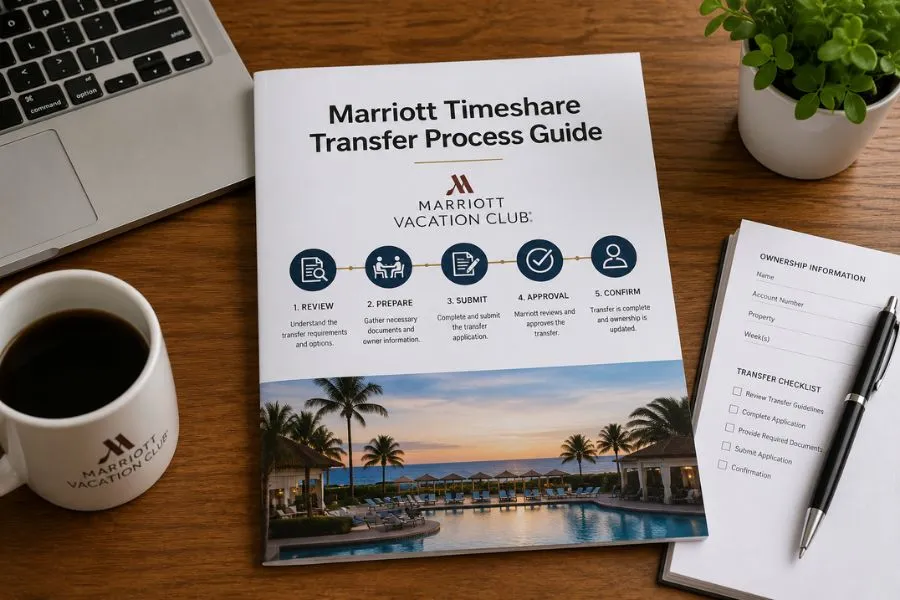
The Timeshare transfer process is the series of steps that officially transfers ownership from the seller to the buyer. It generally includes buyer and seller agreement, ownership verification, document preparation, transfer processing, and final confirmation that the ownership has changed hands.
The exact process may vary depending on the ownership type and transaction.
What Is an Ownership Transfer?
An ownership transfer is the legal and administrative process of changing ownership records from one party to another.
Although the buyer and seller may agree on the sale beforehand, the transaction is not considered complete until the transfer requirements have been satisfied and the ownership records have been updated.
Understanding this distinction helps owners prepare for the steps that follow after a buyer is found.
Step 1: Buyer and Seller Reach an Agreement
The transfer process begins once both parties agree to move forward.
At this stage, they generally confirm:
- Ownership details
- Resort information
- Ownership type
- Transfer expectations
- Next steps in the process
Clear communication at the beginning often helps reduce misunderstandings later.
Step 2: Ownership Verification
Before the transfer moves forward, it's helpful to understand what your Timeshare is worth, and ownership information is typically reviewed.
This may include confirming:
- Ownership records
- Membership information
- Resort details
- Current ownership status
Verification helps ensure that the transaction proceeds using accurate information.
Step 3: Gather Required Documentation
Documentation plays an important role in the transfer process.
Although requirements may vary, owners are often asked to provide information such as:
- Ownership documentation
- Membership details
- Resort information
- Current Timeshare maintenance fee status
- Identification, where applicable
Preparing these records early can help keep the process moving efficiently.
Step 4: Transfer Review and Processing
Once the required information has been collected, the transfer documentation is reviewed and processed.
During this stage, administrative requirements are completed so that ownership records can be updated correctly.
Processing times vary depending on the transaction and ownership details.
Step 5: Ownership Transfer Is Completed
After all required steps have been completed, the ownership transfer is finalized.
At this point, the buyer becomes the new owner according to the completed transfer process, and the seller's ownership responsibilities related to the transferred interest come to an end.
How Long Does the Transfer Process Take?
There isn't a single timeline that applies to every Timeshare Vacation Club ownership.
The duration depends on several factors, including:
- Completeness of documentation
- Ownership type
- Administrative processing
- Accuracy of submitted information
- Overall transaction requirements
Being well prepared can often help reduce avoidable delays.
Common Reasons the Transfer Process May Take Longer
Every ownership transfer is different, so timelines can vary. While some transfers move smoothly, others may take additional time because certain information needs to be reviewed or completed.
Understanding these situations can help owners prepare in advance.
Incomplete Documentation
Missing or inaccurate ownership information is one of the most common reasons for delays.
Before beginning the transfer, make sure all requested documents are complete and up to date.
Ownership Information Needs Verification
Sometimes ownership details require additional review before the transfer can continue.
Providing accurate ownership records from the beginning can help reduce unnecessary back-and-forth communication.
Buyer or Seller Response Delays
The transfer process often requires communication between multiple parties.
If additional information or signatures are requested, responding promptly helps keep the transaction moving forward.
Administrative Processing
Ownership transfers involve administrative review and record updates.
Processing times can vary depending on the ownership and the transaction requirements.
Tips for a Smoother Timeshare Transfer
While no owner can control every stage of the process, a few simple steps can make the experience easier.
Prepare Your Documents Early
Gather your ownership information before the transfer begins.
Having everything organized saves time and helps answer questions more quickly.
Review Your Ownership Details
Double-check important information such as:
- Resort name
- Ownership type
- Membership information
- Maintenance fee status
Accurate information reduces the chances of corrections later.
Stay in Communication
Respond promptly to requests for information or documentation.
Good communication often helps avoid unnecessary delays.
Understand the Process
Knowing what happens at each stage makes it easier to understand what to expect and reduces uncertainty throughout the transaction.
Mistakes to Avoid During the Transfer Process
Some delays are unavoidable, but many can be prevented by avoiding common Timeshare selling mistakes.
Waiting Until the Last Minute
Preparing documents after a buyer has already been found may slow the transfer.
Providing Incomplete Information
Small errors or missing details may require additional verification before the transfer continues.
Assuming Every Transfer Is Identical
Every Timeshare Vacation Club ownership is different.
Transfer requirements and timelines may vary depending on the ownership and transaction.
Not Asking Questions
If you're unsure about any part of the process, asking questions early can help prevent misunderstandings later.
Final Thoughts
Finding a buyer is an important milestone, but completing the ownership transfer is what finalizes the sale.
Owners who are still comparing available selling options may also benefit from reviewing Timeshare resale companies before moving forward.
Although every transfer is different, preparation, communication, and accurate information can make the experience much smoother for everyone involved.