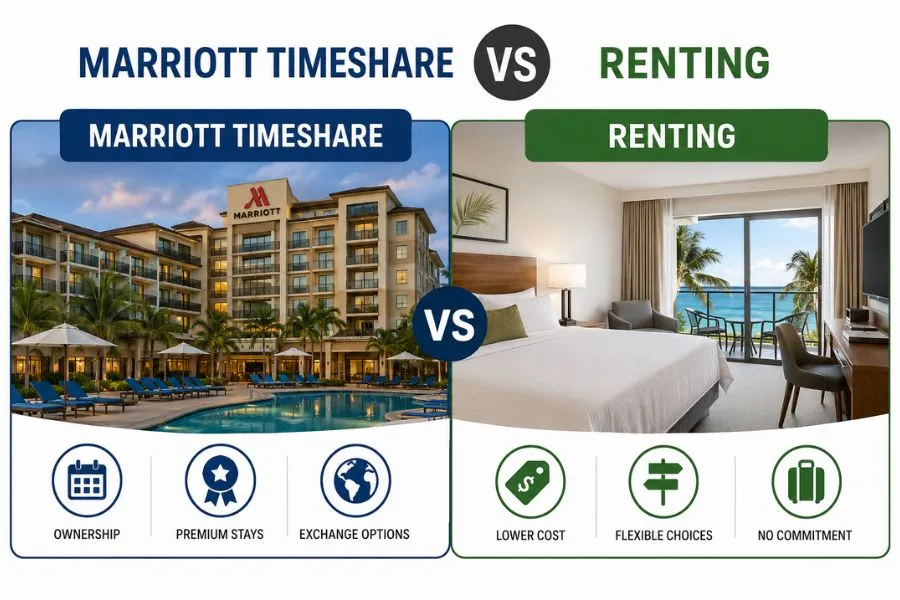
When planning vacations through Timeshare Vacation Club, one question often comes up:
Is it better to own a Timeshare or simply rent when you want to travel?
The answer depends on your travel habits, vacation goals, financial priorities, and long-term plans.
Some travelers appreciate the flexibility of renting because it allows them to vacation without long-term ownership responsibilities. Others prefer ownership because they travel consistently and enjoy the benefits that come with a Timeshare Vacation Club ownership.
For existing owners, the question can be slightly different:
"Should I keep my ownership, rent it out, or consider selling?"
Understanding the differences between ownership and renting can help both current owners and future vacationers make informed decisions.
In this guide, we'll compare Timeshare ownership and renting, explain the advantages and considerations of each option, and help you determine which approach may make the most sense in 2026.
Key Takeaways
- Timeshare ownership and renting offer different vacation experiences.
- Renting provides flexibility without long-term ownership commitments.
- Ownership may appeal to travelers who vacation regularly.
- Annual maintenance fees are an important ownership consideration.
- Renting can be an option for existing owners who want to offset costs.
- Travel frequency often influences which option makes more sense.
- Long-term goals should guide vacation decisions.
- Understanding all available options helps travelers make informed choices.
Timeshare vs Renting: Which Is Better?
There is no one-size-fits-all answer.
For travelers who prefer maximum flexibility and no long-term ownership obligations, renting may be appealing.
For travelers who vacation consistently and value ownership benefits, a Timeshare Vacation Club ownership may be worth considering.
The best option depends on how often you travel, your budget, and your long-term vacation goals.
What Is Timeshare Ownership?
Timeshare Vacation Club ownership provides access to vacation accommodations within the Timeshare Vacation Club network.
Depending on the ownership structure, owners may receive:
- Annual points allocations
- Resort access opportunities
- Vacation planning flexibility
- Reservation benefits
Ownership is generally designed for individuals and families who vacation regularly and want long-term access to vacation experiences.
What Does Renting a Timeshare Mean?
Renting allows travelers to enjoy a vacation stay without purchasing ownership.
Instead of holding ownership rights, renters typically pay for accommodations when needed.
Benefits of Renting
- No long-term commitment
- Greater travel flexibility
- No ownership obligations
- No annual maintenance fees
- Vacation planning freedom
Because of these benefits, renting appeals to many occasional travelers.
Timeshare vs Renting: Key Differences
| Factor | Timeshare Ownership | Renting |
|---|---|---|
| Long-Term Commitment | Yes | No |
| Annual Costs | Ongoing | Only When Traveling |
| Vacation Planning | Ownership-Based | Reservation-Based |
| Maintenance Fees | Applicable | Not Applicable |
| Flexibility | Depends on Ownership | High |
| Ownership Rights | Yes | No |
Both options offer advantages depending on individual travel preferences.
Comparing Costs
Ownership Costs
Ownership may involve:
- Purchase costs
- Annual maintenance fees
- Membership-related expenses
These costs vary depending on ownership type and usage.
Rental Costs
Renters generally pay only when they travel.
This can provide flexibility for travelers who vacation less frequently.
Which Is More Cost Effective?
The answer depends largely on travel frequency and vacation goals.
Frequent travelers may evaluate ownership differently than travelers who take occasional trips.
Comparing Flexibility
Renting Offers Maximum Flexibility
Renters can:
- Travel when desired
- Choose different destinations
- Avoid long-term commitments
- Adjust vacation plans more easily
Ownership Offers Structured Flexibility
Many Timeshare ownership programs provide vacation flexibility, particularly points-based ownerships.
However, ownership also includes ongoing responsibilities.
Travelers should evaluate which form of flexibility aligns best with their needs.
Comparing Long-Term Commitment
Renting Requires No Long-Term Commitment
Many travelers appreciate being able to vacation without ownership obligations.
Ownership Involves Ongoing Participation
Ownership is typically a long-term vacation strategy.
Because of this, prospective owners should carefully evaluate their future travel plans before purchasing.
Vacation Planning Considerations
Ownership Planning
Owners often plan vacations around:
- Points allocations
- Reservation opportunities
- Annual usage
Rental Planning
Renters generally focus on:
- Travel dates
- Availability
- Budget
Both approaches can work well depending on travel preferences.
Ownership Responsibilities vs Rental Simplicity
Ownership Responsibilities
Owners may need to manage:
- Annual fees
- Reservations
- Usage planning
- Ownership records
Rental Simplicity
Renters generally avoid ownership administration and simply focus on booking accommodations.
This simplicity is one reason many travelers choose renting.
When Renting Makes More Sense
Renting may be worth considering if:
You Travel Occasionally
Infrequent travelers often prefer flexibility.
You Prefer No Long-Term Commitment
Renting allows travelers to avoid ownership obligations.
You Like Exploring Different Vacation Options
Travelers who frequently change destinations may appreciate rental flexibility.
You Want Simplicity
Renting typically requires less long-term planning.
Travelers interested in exploring rental opportunities can learn more through our Rent Timeshare services.
When Ownership Makes More Sense
Ownership may be worth considering if:
You Vacation Consistently
Regular travelers may appreciate ownership benefits.
You Prefer Long-Term Vacation Planning
Ownership often supports structured vacation strategies.
You Value Access and Flexibility
Many Timeshare Vacation Club ownerships provide access to a broad vacation network.
You Enjoy Vacation Ownership Benefits
Ownership can provide advantages for travelers who use their vacation opportunities regularly.
Travelers interested in ownership opportunities can explore our Buy Timeshare solutions.
Can Existing Owners Rent Instead of Sell?
Many Timeshare owners ask:
"Do I need to sell my ownership, or can I rent it instead?"
The answer depends on personal goals.
Renting May Make Sense If
- You still value ownership.
- You want to offset annual costs.
- You may use the ownership again in the future.
Selling May Make Sense If
- You no longer use your ownership.
- Travel priorities have changed.
- You're ready to transfer ownership.
Owners evaluating resale options can review our guide on How to Sell a Timeshare in 2026.
What About Timeshare Vacation Club Points Owners?
Points owners often have additional flexibility when evaluating ownership strategies.
Before making decisions, it's important to understand how points ownership works and what options may be available.
Owners should review our guide:
Can You Sell Timeshare Vacation Club Points? A Complete Guide for Owners
This resource explains points ownership considerations in greater detail.
Should You Manage Your Ownership Instead of Renting or Selling?
Some owners are not ready to sell or rent.
Instead, they want to maximize the value of their ownership.
In these situations, professional Manage Timeshare services may help with:
- Reservation planning
- Points utilization
- Ownership strategy
- Vacation optimization
Understanding all available options can lead to better long-term decisions.
Common Mistakes People Make When Comparing Renting and Ownership
Focusing Only on Cost
Vacation value includes more than financial considerations.
Ignoring Travel Habits
Travel frequency plays a major role.
Assuming One Solution Fits Everyone
Every traveler's situation is unique.
Not Evaluating Long-Term Goals
Future vacation plans should influence decision-making.
Making Decisions Without Research
Understanding available options often leads to stronger outcomes.
Final Thoughts
Choosing between Timeshare ownership and renting ultimately comes down to how you travel and what you want from your vacation experience.
Some travelers value the flexibility and simplicity of renting. Others appreciate the structure, access, and long-term benefits associated with ownership.
For existing owners, the decision may involve evaluating whether renting, selling, or continuing ownership makes the most sense moving forward.
There is no universal solution.
The best choice is the one that aligns with your travel habits, financial priorities, and long-term goals.